Junior
Junior
Couldn't load pickup availability
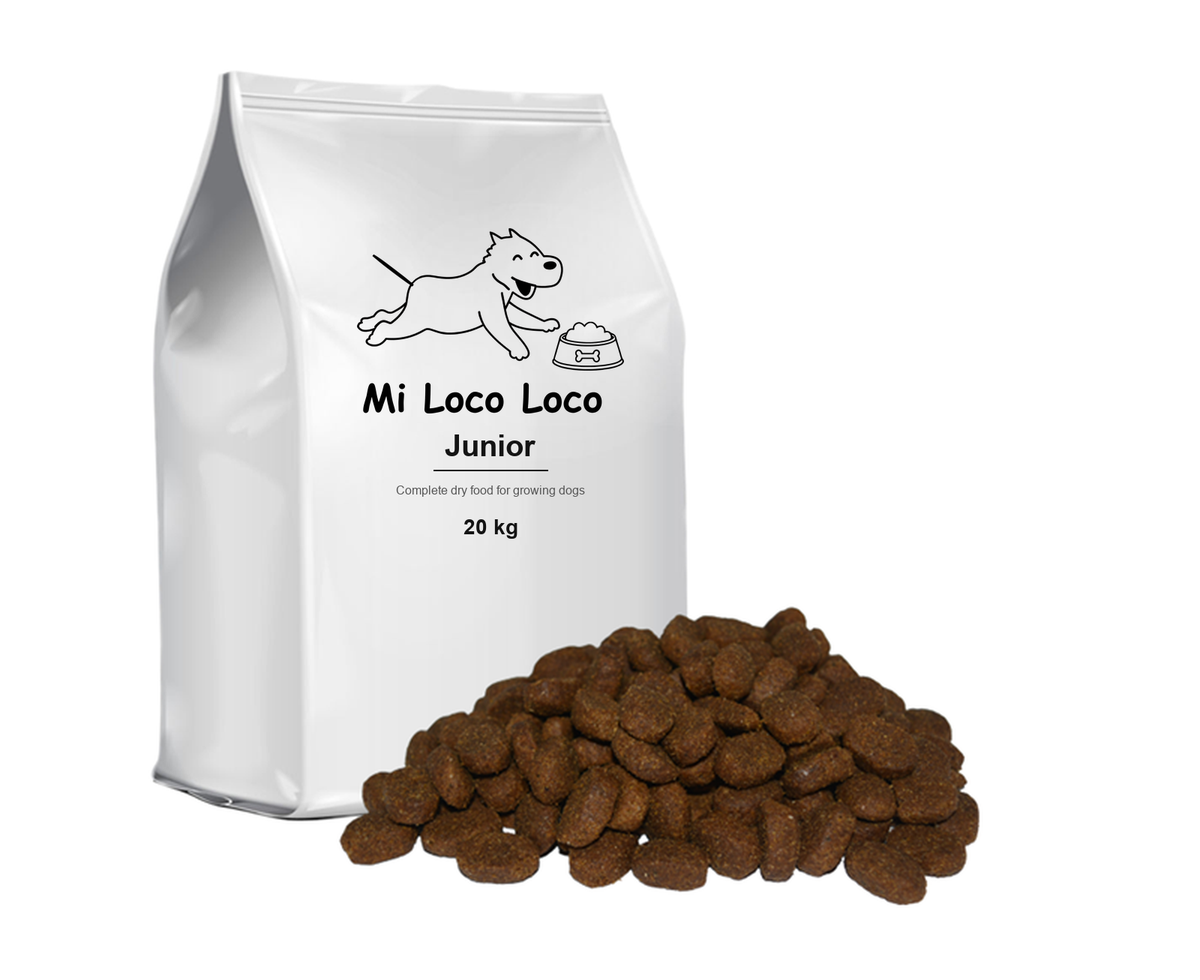
For junior dogs — 6 to 18 months. Complete dry food for the stage between puppy and adult, packed under our own label and shipped from the Netherlands.
Pick the bag size that fits your dog. A 10 kg bag is about a month of food for a medium-sized dog; take 4 kg to try it out, or 20 kg for a large breed.
How much to feed
How much to feed
A junior dog is still growing, but no longer at full speed. Our supplier’s table stops at six months, so from there on work back from the adult amount: take what a grown dog of your puppy’s current weight would eat and add roughly a quarter to a third on top. Reduce that extra as growth slows, until you land on the plain adult amount.
Most dogs are fully grown between twelve and eighteen months; large and giant breeds take longer. Weigh your dog every week or two: you want a steady climb, not a sudden jump. If you can no longer feel the ribs easily, take the extra off sooner.
Split the daily amount over two meals and always leave fresh water available.
This recipe provides 357 kcal per 100 g. Every young dog grows at its own pace — weigh yours regularly and adjust within the range.
Ingredients
Ingredients
Chicken, maize, rice, barley, chicken fat, beet pulp, fish, linseed, egg powder, salmon oil, yeast, carob, taurine, lecithin, glucosamine, chondroitin.
Analytical constituents
Analytical constituents
Crude protein 26.5% · Crude fat 15.0% · Crude fibre 3.5% · Crude ash 6.0% · Calcium 1.4% · Phosphorus 1.1% · Moisture 10.0%
Energy: approximately 357 kcal per 100 g, calculated from the constituents above.
Nutritional additives per kg
Nutritional additives per kg
Vitamin A (alpha-retinyl acetate) 18000 IU, vitamin D3 (cholecalciferol) 1800 IU, vitamin E (all-rac-alpha-tocopheryl acetate) 200 mg, copper (copper(II) sulphate pentahydrate) 5.0 mg, zinc (zinc sulphate monohydrate) 65.0 mg, iron (iron(II) sulphate monohydrate) 50.0 mg, manganese (manganese(II) oxide) 35.0 mg, iodine (calcium iodate, anhydrous) 1.5 mg.
Share